




ANGLE
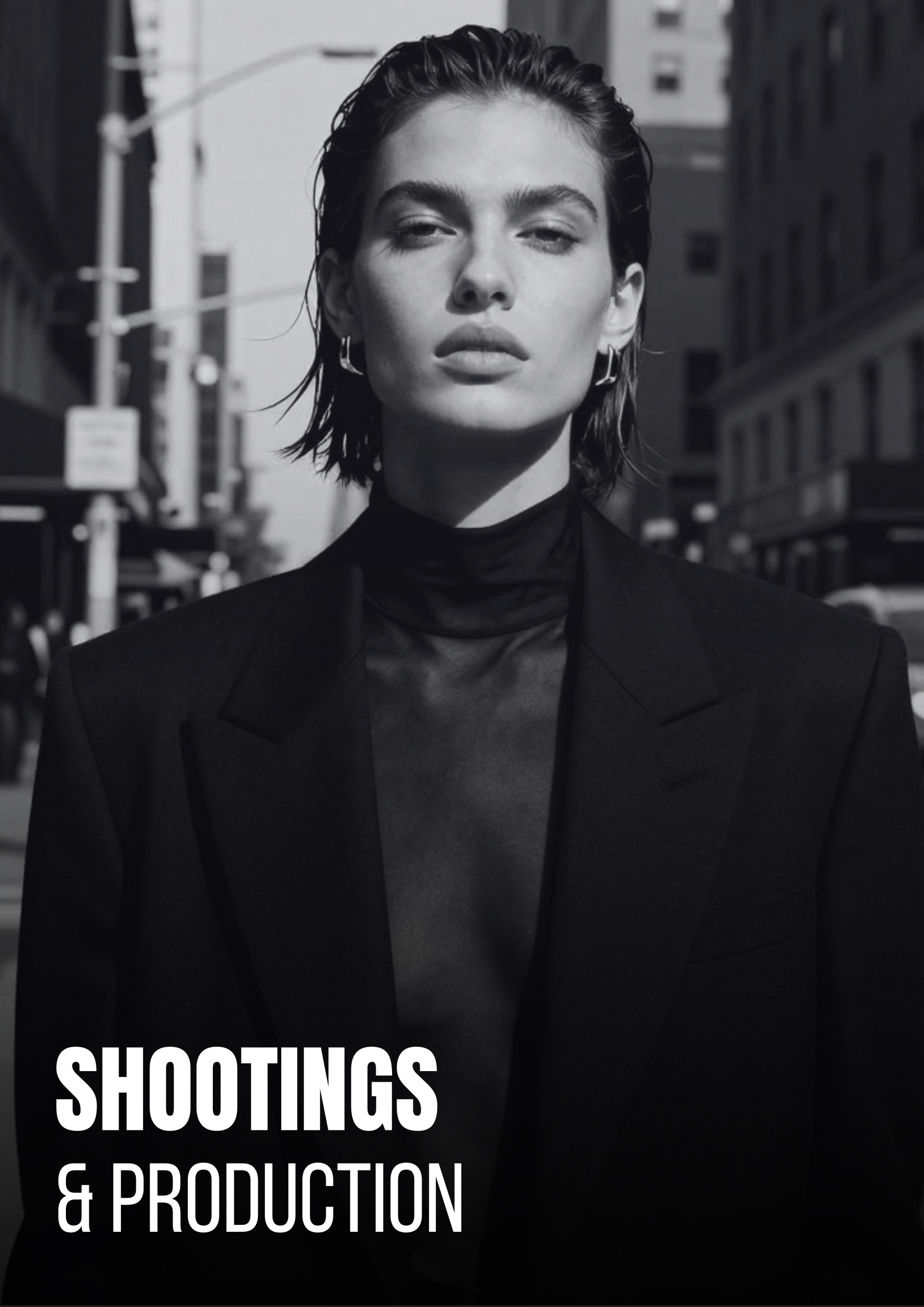
An angle describes the conscious positioning and orientation of the head, body, and gaze in relation to the camera and the light. It’s not simply about an angle, but rather a key control mechanism with which models actively shape their impact.
In professional photography, it’s often the smallest adjustments – so-called micro-angles – that make all the difference: A slightly lowered chin, a subtle turn of the head, or a subtly altered gaze can determine whether an image appears flat or gains tension and depth. This is precisely where a beginner differs from an experienced model.
Angles are always directly related to the light. A good model intuitively adjusts their posture to how the light hits their face and body in order to create targeted shadows and highlights. For example, cheekbones, jawline, or the eye area are consciously emphasized.
Another principle is the so-called “No Flat Rule”: A model never stands completely frontally and statically facing the camera, as this makes the image appear flat and lifeless. Instead, subtle turns of the shoulders, hips, and head create natural tension and dynamism in the image.
Professional models also work with a fluid transition between angles, the so-called “flow.” The movements are small, controlled, and flow seamlessly into one another, constantly creating new variations of the image without appearing posed.
Ultimately, the chosen angle influences not only the form but also the emotional impact of an image. Depending on the pose, a model can appear dominant, soft, distant, or approachable – often through minimal adjustments.
Those who master their angle automatically appear more professional, sophisticated, and significantly more powerful in front of the camera.
In our Academy, posing classes are mandatory and included in every workshop.